Stumps Ground Below Grade for Replanting
Stump grinding in Shreveport for properties completing tree removal, reclaiming yard space, and preparing sites for construction
Stump grinding removes unsightly tree stumps and restores usable space on your property. Leftover stumps can interfere with mowing, create tripping hazards, attract pests, and limit your landscaping options. Grinding the stump below ground level allows the area to be covered with soil and prepared for grass, planting, or future projects.
Barron's Tree Service uses professional equipment to efficiently grind stumps of various sizes, including those left behind after tree removals. The process minimizes disruption to the surrounding landscape while eliminating the visible portion of the stump and improving the appearance of your yard.
Contact Barron's Tree Service to schedule stump grinding as a standalone service or as part of a complete tree removal project.
What You Notice Once Grinding Is Finished
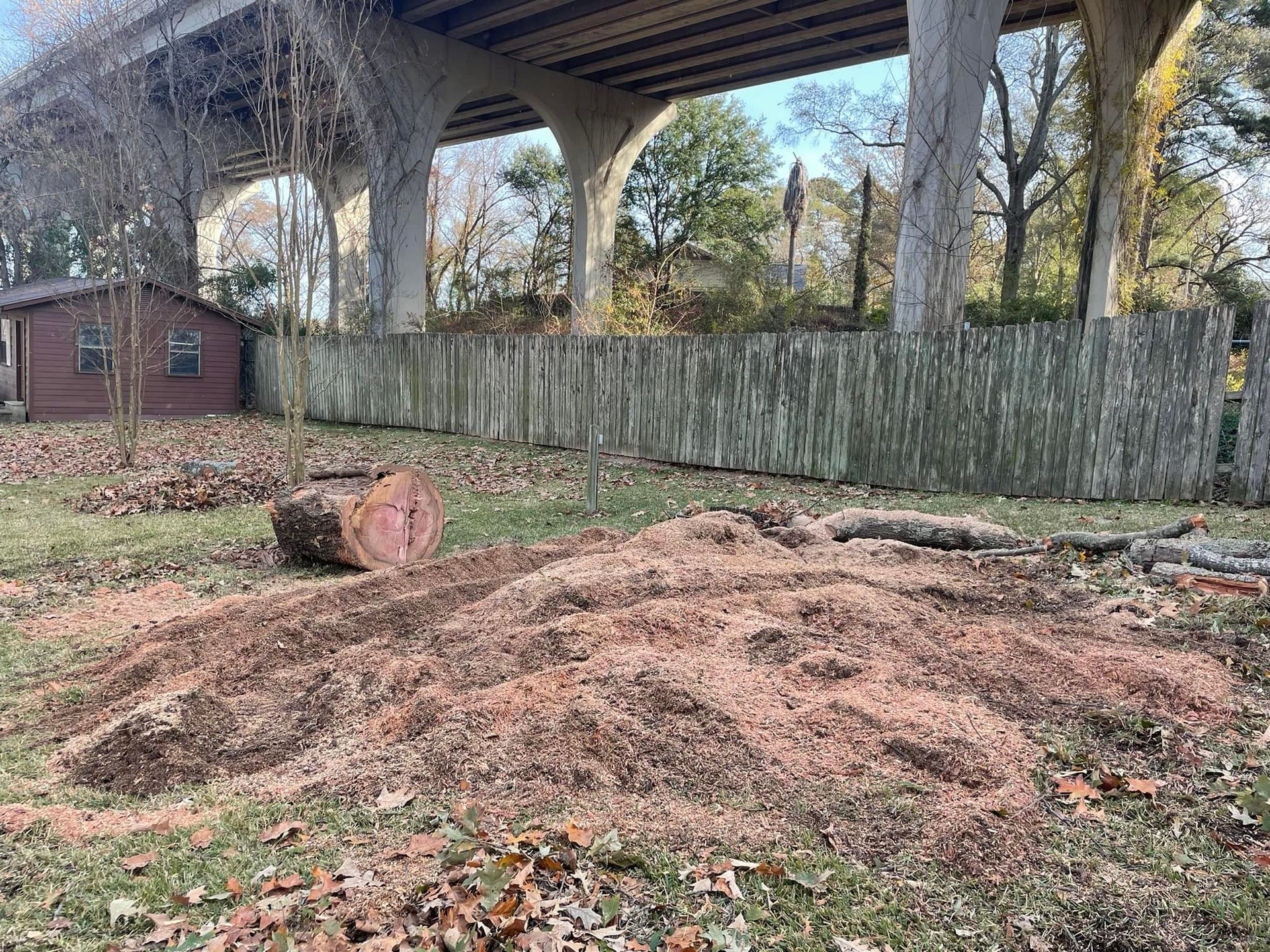
After grinding is complete, the stump is reduced below ground level, leaving a shallow area filled with wood chips that can be covered with soil and prepared for future landscaping. This process eliminates the visible stump and improves the appearance and usability of your property.
Most surface roots within the immediate grinding area are also removed, while deeper roots are left underground to naturally decompose over time. Depending on your plans for the space, wood chips can be removed or used as part of the restoration process.
Stump grinding can be completed alongside tree removal or scheduled as a standalone service, providing a convenient solution for clearing unwanted stumps from your property.
Common Questions About This Service
Stump grinding questions typically focus on timing, costs, and what happens to the wood chips left behind after the work is complete.
How deep does grinding go below ground level?
Professional grinding typically reaches eight to twelve inches below grade, which provides sufficient depth for lawn restoration, though deeper grinding is available if you're installing foundations or hardscaping that requires complete stump elimination.
What happens to the wood chips after grinding?
Chips are left on site and can be used as mulch, mixed with topsoil to fill the depression, or hauled away for an additional fee depending on your preference and how quickly you want to replant the area.
What's the difference between pruning and topping?
Grinding can occur immediately after removal if the grinder is available, though many jobs are scheduled as follow-up visits when the equipment route includes your neighborhood, since the grinder is specialized equipment that isn't always on the same truck as cutting tools.
Why do large hardwood stumps cost more to grind?
Louisiana hardwoods like oak and pecan have dense wood and extensive root flares that require more grinding time and wear on carbide teeth compared to softwood stumps, which directly affects the labor and equipment costs for the job.
Can stumps be ground near fences and structures?
Grinding is possible within inches of obstacles, though access width determines whether the equipment can reach the stump, since grinders require clear pathways and cannot fit through narrow gates or between closely spaced structures.
Barron's Tree Service uses specialized grinding equipment built to handle the tough hardwood stumps common across the ArkLaTex region. Contact the team to schedule grinding as part of your removal job or request a separate visit when equipment is available in your area.